Labor Law of Federation of Bosnia and Herzegovina
Labor authorityJurisdiction: Bosnia and Herzegovina
Publisher
Foreign Investment Promotion Agency of Bosnia and Herzegovina
Checked
March 24, 2026
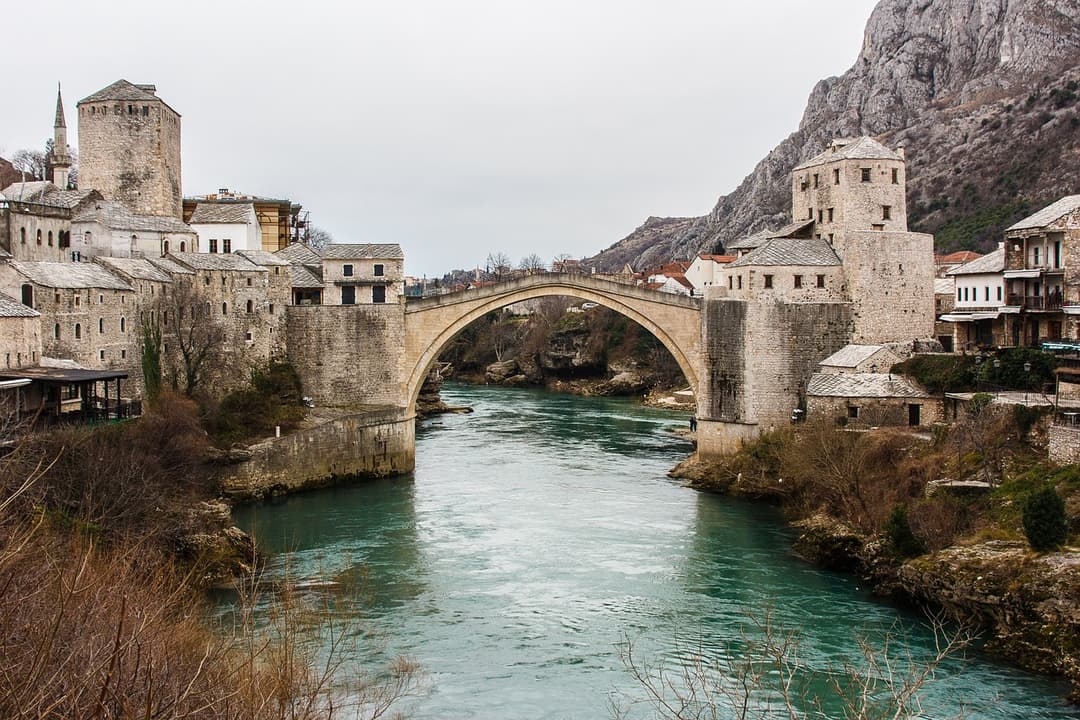
Global Insights
Bosnia and Herzegovina hiring execution generally depends on disciplined income-tax withholding, contribution management, and documented labour-law controls. Employers should align payroll, leave, and separation controls before local hiring.
Operational snapshot
Bosnia and Herzegovina hiring execution generally depends on disciplined income-tax withholding, contribution management, and documented labour-law controls. Employers should align payroll, leave, and separation controls before local hiring.
Capital
Sarajevo
Payroll cycle
Monthly
Employer contribution
12.3%
Languages
Bosnian, Croatian, Serbian
Currency
BAM
Last reviewed
March 23, 2026
Employment and compliance summary
Employer cost and contributions
Employer planning should include salary commitments, mandatory contribution handling, and the wider cost of compliant employment administration instead of modeling only base pay. Budget...
Payroll and tax operations
Payroll should be configured for Bosnia and Herzegovina income-tax withholding, contribution processing, and defensible worker records from the first cycle. Employers should verify...
Leave and holiday rules
Leave balances and public-holiday administration should stay aligned with labour-law requirements and internal worker records. Holiday treatment should be reviewed before role changes,...
Termination and notice
Employment exits should be checked against labour-law procedure, notice handling, and supporting documentation before execution. Final pay, unused leave, and payroll closeout should be...
As of January 1, 2024, the minimum wage in Bosnia and Herzegovina varies between its two main entities: the Federation of Bosnia and Herzegovina (FBiH) and the Republika Srpska (RS). The minimum wage in the FBiH has been set at BAM 619 per month, while in the RS, it is BAM 900 per month. These wages are designed to ensure that workers receive a basic standard of living.
| Entity | Minimum Wage (BAM) |
|---|---|
| Federation of Bosnia and Herzegovina | 619 |
| Republika Srpska | 900 |
Bosnia and Herzegovina employs a progressive income tax system. The tax rates vary based on income levels, with different brackets applicable to individuals. The following are the key tax brackets:
Employers are responsible for withholding income tax from employees’ salaries and remitting it to the tax authorities.
| Income Bracket | Tax Rate |
|---|---|
| Up to BAM 24,000 | 10% |
| BAM 24,001 to BAM 50,000 | 20% |
| Above BAM 50,000 | 30% |
Payroll costs in Bosnia and Herzegovina consist not only of salaries but also mandatory contributions and deductions. Employers need to consider the following components when calculating payroll costs:
The total payroll cost can vary significantly based on the employee’s salary and any additional benefits provided by the employer.
| Payroll Cost Component | Description |
|---|---|
| Salary | Base pay for employees |
| Social Security Contribution | Approximately 32% of gross salary |
In Bosnia and Herzegovina, overtime pay regulations stipulate that employees who work beyond the standard working hours are entitled to additional compensation. The standard workweek is typically 40 hours, and any hours worked beyond this threshold must be compensated at a rate of 150% of the regular hourly wage.
| Overtime Regulation | Description |
|---|---|
| Standard Working Hours | 40 hours per week |
| Overtime Rate | 150% of regular hourly wage |
This detailed overview covers minimum wage requirements, income tax obligations, payroll costs, and overtime pay regulations in Bosnia and Herzegovina. Understanding these aspects is essential for employers navigating the employment landscape in this country.
In Bosnia and Herzegovina, the standard workweek is typically set at 40 hours, which is divided into five working days. The maximum number of hours an employee can work is generally capped at 48 hours per week, including any overtime. Employees are entitled to a minimum of 30 minutes of break time for every six hours of continuous work.
| Working Hours | Description |
|---|---|
| Standard Work Week | 40 hours (5 days) |
| Maximum Work Week | 48 hours (including overtime) |
| Break Time | Minimum 30 minutes for every 6 hours worked |
Employees in Bosnia and Herzegovina are entitled to various types of leave, with specific regulations governing each type. The primary types of leave include:
| Type of Leave | Description |
|---|---|
| Annual Leave | Minimum 20 working days |
| Sick Leave | Minimum 5 days |
| Maternity Leave | 365 days (with full pay for part) |
| Paternity Leave | Not legally mandated, varies by employer |
Bosnia and Herzegovina observes several public holidays, which may vary between the Federation of Bosnia and Herzegovina (FBiH) and the Republika Srpska (RS). Employees are entitled to paid time off on these holidays. Key public holidays include:
When a public holiday falls on a weekend, a substitute day off is often granted.
| Holiday | Description |
|---|---|
| New Year’s Day | January 1 |
| Independence Day | March 1 |
| Labor Day | May 1 |
| Christmas Day | December 25 |
| Eid al-Fitr | Varies based on lunar calendar |
This detailed overview covers regular and maximum working hours, various types of leave, and holiday observances in Bosnia and Herzegovina. Understanding these aspects is essential for employers navigating the employment landscape in this country.
In Bosnia and Herzegovina, the termination of employment is governed by specific legal requirements that differ between the Federation of Bosnia and Herzegovina (FBiH) and the Republika Srpska (RS). Employers must have valid reasons for termination, which can include economic, technical, or organizational changes, as well as employee misconduct.
| Termination Requirement | FBiH | RS |
|---|---|---|
| Valid Reasons | Economic, technical, organizational | Economic, technical, organizational |
| Written Warning | Required for minor violations | Not specified |
| Immediate Termination | Allowed for serious breaches | Allowed for serious breaches |
The notice period for terminating employment contracts varies by entity. Employees must provide notice to employers and vice versa.
| Notice Period | FBiH | RS |
|---|---|---|
| Employee to Employer | 7 days | 15 days |
| Employer to Employee | 14 days | 30 days |
Severance pay is a critical aspect of employment termination in Bosnia and Herzegovina. Employees who have worked for at least two years are generally entitled to severance pay upon termination by their employer. The calculation of severance pay is based on the employee’s average monthly salary during the last three months of employment.
| Severance Pay Calculation | FBiH | RS |
|---|---|---|
| Eligibility | Minimum 2 years of service | Minimum 2 years of service |
| Calculation | 1/3 of average monthly salary per year | Similar to FBiH |
| Maximum Pay | Up to 6 average monthly salaries | Up to 6 average monthly salaries |
Probation periods are commonly used in Bosnia and Herzegovina to evaluate new employees. The length of the probation period can vary but typically lasts up to six months. During this time, either party can terminate the contract with a shorter notice period.
| Probation Period | Description |
|---|---|
| Typical Length | Up to 6 months |
| Notice Period During Probation | 7 days |
This comprehensive overview covers termination requirements, notice periods, severance pay, and probation periods in Bosnia and Herzegovina. Understanding these aspects is crucial for employers navigating the employment landscape in this country.
In Bosnia and Herzegovina, the distinction between independent contractors and employees is crucial for compliance with labor laws. Misclassification can lead to significant legal and financial repercussions for businesses. The Labor Code of Bosnia and Herzegovina outlines the differences between these two categories.
Misclassifying an employee as an independent contractor can result in penalties, including back payments for social security contributions and fines.
| Classification Factor | Employee | Independent Contractor |
|---|---|---|
| Level of Control | High | Low |
| Benefits | Entitled to various benefits | No entitlement to employee benefits |
| Tax Responsibilities | Employer deducts taxes | Responsible for own tax filings |
The legal framework governing contractors in Bosnia and Herzegovina is primarily established by the Labor Code. Employers must ensure that contracts with independent contractors are clear and comply with local laws. Key components of a contractor agreement should include:
| Contract Type | Description |
|---|---|
| Service Agreement | Defines specific services to be provided |
| Fixed-Term Contract | For temporary or project-based work |
Independent contractors in Bosnia and Herzegovina are considered self-employed for tax purposes. They must register with the tax authorities and are responsible for filing their own tax returns. Key tax responsibilities include:
| Tax Responsibility | Description |
|---|---|
| Self-Assessment | Required to file annual tax returns |
| Tax Registration | Must register with local tax authorities |
Ensuring compliance with local laws is crucial when hiring independent contractors. Misclassification can lead to penalties, including back payments for social security contributions. Factors considered when determining the nature of the working relationship include:
| Compliance Factor | Employee | Independent Contractor |
|---|---|---|
| Control over Work | High | Low |
| Provision of Tools | Yes | No |
| Exclusivity | Often required | Not required |
This comprehensive overview covers misclassification issues, legal frameworks, tax responsibilities, and compliance considerations related to independent contractors in Bosnia and Herzegovina. Understanding these aspects is essential for employers looking to create a compliant working environment while minimizing legal risks.
When hiring foreign workers in Bosnia and Herzegovina, understanding the visa requirements is essential. The visa policy varies depending on the nationality of the applicant. Citizens of certain countries can enter Bosnia and Herzegovina without a visa for short stays, while others must obtain a visa prior to arrival.
| Visa Requirement | Description |
|---|---|
| Visa-Free Entry | Up to 90 days for citizens of specific countries |
| Visa Application Process | Must be submitted in person at a diplomatic mission |
| Required Documents | Passport, application form, proof of accommodation, financial proof |
Understanding the local work culture is vital for successful integration into the Bosnian workplace. Key cultural aspects include:
| Cultural Aspect | Description |
|---|---|
| Communication Style | Direct but polite |
| Decision-Making | Hierarchical with input from team members |
| Work-Life Balance | Emphasis on maintaining personal time |
Bosnia and Herzegovina has a rich cultural heritage influenced by various religions. Understanding these customs can enhance workplace harmony:
| Aspect | Description |
|---|---|
| Religious Diversity | Predominantly Muslim with Christian communities |
| Cultural Sensitivity | Respect for religious practices |
| Community Engagement | Festivals that encourage team bonding |
This detailed overview covers visa requirements, local work culture, and religious customs in Bosnia and Herzegovina. Understanding these aspects is essential for employers looking to create a positive working environment in this unique country.
Reviewed by
Last reviewed
March 23, 2026
Sources
Reviewed by PIO Compliance Research Team against public labor, payroll tax, social contribution, leave, termination, and employer compliance references relevant to the approved country guide set.
Referenced sources
Publisher
Foreign Investment Promotion Agency of Bosnia and Herzegovina
Checked
March 24, 2026
Publisher
Tax Administration of the Federation of Bosnia and Herzegovina
Checked
March 24, 2026
Publisher
Tax Administration of the Federation of Bosnia and Herzegovina
Checked
March 24, 2026
+
Global service team
+
Global customer count
+
People on the platform