
Introduction: The Business Structure Dilemma
Imagine a burgeoning startup, “GlobalTech Innovators,” poised to expand its operations across international borders. With a rapidly growing customer base and a team scattered across multiple countries, GlobalTech faces a crucial decision: choosing the right business structure to support its global ambitions. This decision isn’t just about compliance; it’s about optimizing for tax efficiency, legal protection, and operational flexibility. Enter PIO, a platform designed to assist businesses like GlobalTech in managing their international operations seamlessly.
Choosing the appropriate business structure is a pivotal step for any company, but it’s especially critical for those navigating the complexities of international markets. This decision not only impacts the company’s financial health but also its ability to adapt to diverse regulatory environments. Let’s delve into why the choice between an S Corporation (S Corp) and a Sole Proprietorship is significant for globally-minded businesses.
Context & Relevance of Business Structures
The business structure you choose can profoundly affect your company’s international operations. As globalization intensifies and remote work becomes more prevalent, companies are increasingly finding themselves operating across borders. These trends necessitate a closer examination of business structures and their implications on global operations.
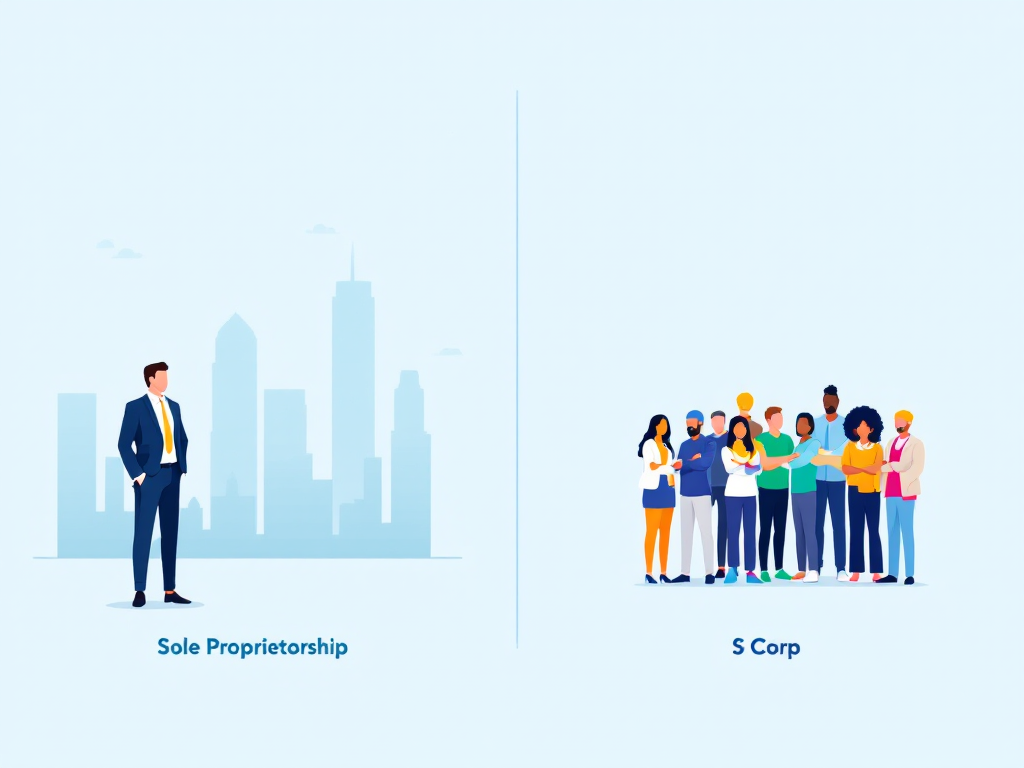
S Corporations and Sole Proprietorships each offer distinct advantages and challenges, especially in the context of international expansion. For instance, an S Corp, with its ability to pass corporate income, losses, deductions, and credits to shareholders for federal tax purposes, can offer significant tax benefits. On the other hand, a Sole Proprietorship, characterized by its operational simplicity and minimal regulatory requirements, may appeal to businesses seeking straightforwardness.
The implications of these structures are far-reaching. They affect everything from taxation and legal liabilities to the ease with which a company can navigate cross-border operations. Understanding these nuances is essential for any business looking to thrive on a global stage.
Challenges & Opportunities of S Corp and Sole Proprietorship
Both S Corps and Sole Proprietorships present unique challenges and opportunities, particularly in the realm of international business.
- Tax Implications: One of the primary challenges facing S Corps is the complexity of tax compliance, especially when dealing with foreign income. However, the tax advantages, such as avoiding double taxation, can be substantial. Sole Proprietorships, while simpler in terms of tax filing, may not offer the same level of tax benefits, potentially leading to higher tax liabilities.
- Legal Liabilities: Sole Proprietorships expose owners to significant personal liability, which can be a major drawback when operating internationally. In contrast, S Corps provide a layer of protection by separating personal and business assets.
- Operational Simplicity vs. Complexity: Sole Proprietorships offer operational simplicity, making them attractive for small businesses and entrepreneurs. However, as businesses scale, the lack of a formal structure can become a hindrance. S Corps, while more complex, provide a framework that supports growth and scalability.
These challenges and opportunities manifest differently across sectors and company sizes. For instance, a tech startup might prioritize tax efficiency and scalability, favoring an S Corp structure. In contrast, a small consultancy firm might opt for the simplicity of a Sole Proprietorship.
Expert Insights & Best Practices
What the Experts Say
“Choosing the right business structure is not just about current needs but anticipating future growth. An S Corp might require more upfront work, but it can pay off as the company scales globally.” – Jane Doe, International Business Consultant
Pitfalls to Avoid
- Do: Conduct thorough research on the regulatory requirements of each country you operate in.
- Do: Consider long-term growth when selecting your business structure.
- Don’t: Overlook the importance of compliance and reporting requirements.
- Don’t: Choose a structure based solely on current operations without considering future expansion plans.
PIO supports businesses in navigating these complexities by offering tools and resources that streamline compliance and reporting. Whether you’re managing payroll across multiple currencies or ensuring adherence to local labor laws, PIO provides the infrastructure needed to manage these tasks efficiently.
Real-World Anecdotes or Case Studies
Consider the case of “EcoSolutions,” a company that transitioned from a Sole Proprietorship to an S Corp as it expanded internationally. Initially, EcoSolutions enjoyed the simplicity of a Sole Proprietorship. However, as the company grew, it faced increasing tax burdens and legal liabilities. By transitioning to an S Corp, EcoSolutions benefited from tax savings and limited liability, allowing it to reinvest in its global expansion.
PIO played a crucial role in this transition by providing the tools needed to manage international payroll and compliance. As a result, EcoSolutions reported a 20% reduction in administrative costs and an increase in operational efficiency, enabling it to focus on core business activities.
Looking Ahead: Future of Business Structures
The landscape of business structures is evolving, influenced by digital transformation and globalization. Emerging technologies, such as blockchain and e-wallets, are reshaping how businesses manage cross-border transactions. As these technologies become more prevalent, the choice between S Corp and Sole Proprietorship will continue to evolve.
In a globalized economy, businesses must remain agile and adaptable. This means staying informed about regulatory changes and technological advancements that could impact their chosen business structure. Companies that proactively adapt to these changes will maintain a competitive edge in the marketplace.
Conclusion & Call to Action
Choosing between an S Corp and a Sole Proprietorship is a decision that can significantly impact a business’s success in international operations. Each structure offers unique advantages and challenges, and the right choice depends on a company’s specific needs and future goals.
As you consider your business structure, explore how PIO can support your international endeavors with tools designed to simplify global operations. Ready to simplify your global operations and tackle business structure challenges head-on? Discover how PIO can help — https://pioinc.com/.
We invite you to share your experiences and insights in the comments section below. Your feedback could be invaluable to others facing similar decisions.