
Introduction: The Global Payroll Puzzle
Imagine a multinational corporation that has just expanded into its tenth country this year. With remote teams spread across different time zones and continents, managing payroll becomes a significant challenge. Each country has its own set of payroll regulations, pay periods, and cultural expectations. The finance team is overwhelmed by the complexity of juggling various pay schedules while ensuring compliance with local laws. This is where the concept of pay period becomes crucial for the effective management of global operations and where PIO steps in to streamline this intricate process.
For any business operating on a global scale, understanding and managing pay periods is not just about processing salaries. It’s about balancing a multitude of factors, including legal compliance, employee satisfaction, and cash flow management. PIO offers a comprehensive platform designed to address these challenges, transforming the way companies handle their international payroll with ease and efficiency.
Understanding Pay Periods
Types of Pay Periods
A pay period is the frequency with which employees receive their salaries. Common pay periods include weekly, bi-weekly, and monthly schedules. The choice of pay period can significantly impact a company’s payroll processes and employee satisfaction. For instance, while some employees might prefer the immediacy of weekly paychecks, others may favor the stability of a monthly salary.
Legal and Cultural Variations
Globally, pay periods are influenced by a variety of legal and cultural factors. In some countries, labor laws dictate specific pay schedules that companies must adhere to, while in others, cultural norms might favor less frequent payments. For example, in the United States, bi-weekly payment is common, whereas, in many European countries, monthly pay is the norm.
Aligning pay periods with local regulations is crucial to avoid legal pitfalls and ensure compliance. Understanding these variations helps businesses maintain a positive relationship with their international teams and avoid unnecessary legal complications.
Significance of Pay Period in Global Operations
Understanding and effectively managing pay periods is essential for companies with a global workforce. The rise of remote work and international hiring has made it even more important to navigate diverse payroll systems efficiently. Recent trends show a significant increase in businesses expanding their operations globally, driven by the need to tap into wider talent pools and new markets.
Pay periods can have a direct impact on a company’s cash flow and employee satisfaction. For instance, shorter pay periods may lead to increased cash flow demands, while longer periods could result in employee dissatisfaction if not managed properly. Balancing these aspects is vital for maintaining a motivated workforce and ensuring smooth financial operations.
Challenges and Opportunities
Common Payroll Challenges
Managing payroll on a global scale comes with its own set of challenges. Currency fluctuations, for example, can complicate salary calculations and impact a company’s financial planning. Additionally, compliance with local labor laws and tax regulations can be daunting, requiring constant updates and adjustments to payroll systems.
Opportunities for Optimization
Despite these challenges, there are significant opportunities for businesses willing to optimize their payroll processes. Streamlining payroll can lead to cost savings and improved operational efficiency. By adopting a centralized payroll solution like PIO, companies can reduce errors, improve compliance, and ultimately enhance employee satisfaction by ensuring timely and accurate payments.
Sector-specific challenges also present opportunities for tailored solutions. For instance, the tech industry might focus on integrating payroll with existing digital tools, while manufacturing might look at optimizing payroll cycles to align with production schedules.
Expert Insights and Best Practices
Workflow Automation
Automation plays a key role in simplifying payroll processes. By automating repetitive tasks, companies can reduce errors and free up valuable time for more strategic activities. Implementing automation solutions can help manage pay periods more effectively, ensuring compliance and accuracy across different regions.
Compliance Checklists
Maintaining compliance with local laws is crucial when managing a global workforce. Developing compliance checklists can help businesses stay on top of regulatory changes and ensure that all payroll processes meet local requirements. PIO offers tools that integrate these best practices, supporting businesses in maintaining compliance seamlessly.
What the Experts Say: “Incorporating a unified payroll solution is not just about convenience; it’s about ensuring accuracy and compliance in an increasingly complex global market.” – Industry Expert
By leveraging the right tools and strategies, businesses can navigate the complexities of global payroll with confidence and ease.
Real-World Anecdotes: Success Stories
Consider the case of a tech startup that expanded rapidly across Asia and Europe. Initially, the company struggled with managing different pay periods and compliance requirements in each country. By partnering with PIO, they were able to streamline their payroll operations, resulting in a 20% reduction in payroll processing time and a significant decrease in compliance-related errors.
Another example is a manufacturing firm that faced challenges with currency fluctuations affecting their payroll budget. By using PIO’s multicurrency support, they stabilized their payroll expenses, leading to improved financial forecasting and budgeting.
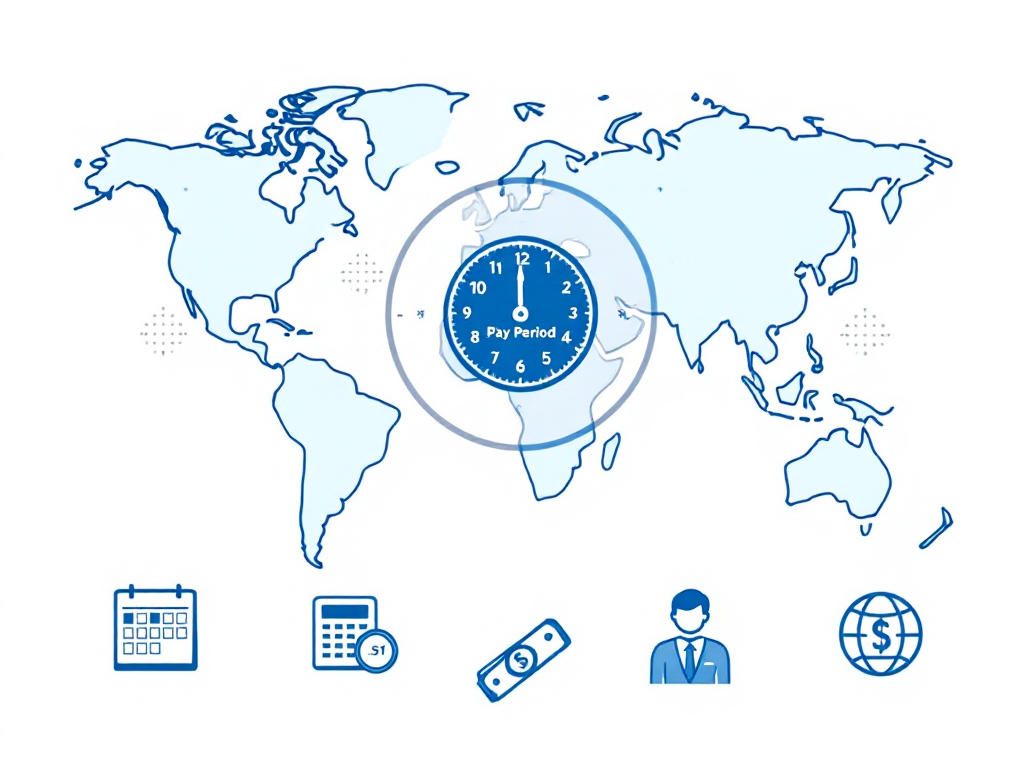
These stories highlight the tangible benefits of using a comprehensive payroll solution to overcome complex challenges in global payroll management.
Looking Ahead: The Future of Payroll
The future of payroll is rapidly evolving with emerging technologies and trends. Blockchain technologies and e-wallet adoption are set to transform how businesses handle cross-border transactions and payroll. These advancements offer the potential for faster, more secure payments and reduced transaction costs.
To remain competitive, businesses must stay ahead of these trends and adapt proactively. Future-proofing payroll strategies involves embracing digital tools and platforms that offer flexibility and scalability, such as PIO.
As blockchain technologies and e-wallet adoption rise, pay periods will likely evolve. Businesses that adapt proactively can maintain an edge in cross-border transactions.
Conclusion and Call to Action
In conclusion, understanding and managing pay periods is a critical aspect of global business operations. As companies continue to expand internationally, the complexity of payroll systems will only increase. By leveraging solutions like PIO, businesses can simplify their payroll processes, ensuring compliance and enhancing employee satisfaction.
Ready to simplify your global operations and tackle pay periods head-on? Discover how PIO can help. Explore PIO for deeper insights and solutions tailored to your business needs.
We invite you to share your experiences and challenges with international payroll in the comments below. Together, we can navigate the global payroll puzzle with confidence and efficiency.